LM Warden, in ten short videos.
The five-minute overview first, then one video for each feature, each at the top of its own page. All of them have English captions.
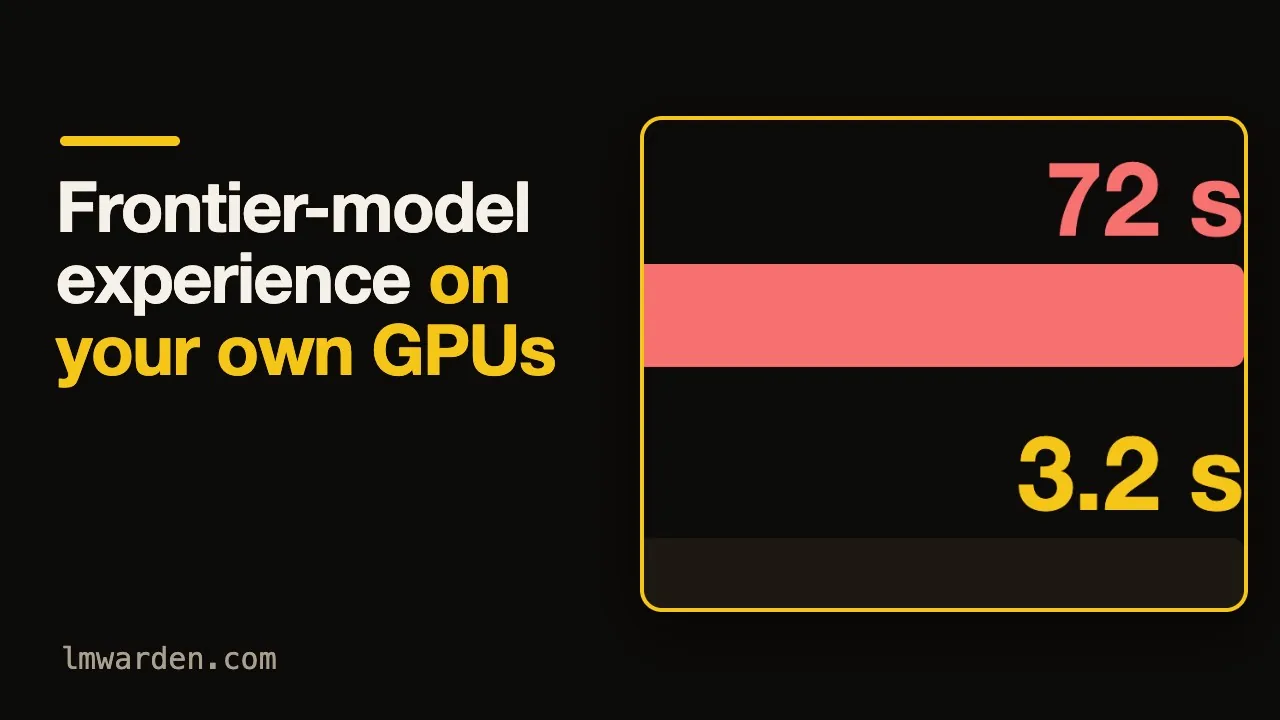
LM Warden: frontier-model experience on your own GPUs (demo)
Video, 5:20, with English captionsLM Warden is free, open-source middleware for running LLMs on your own GPUs with a frontier-model experience: one OpenAI- and Anthropic-compatible endpoint, the standard vLLM and llama.cpp engines, and a cache that keeps working. For developers and teams who run coding agents, chat apps and automations on their own hardware, on-premise or air-gapped.
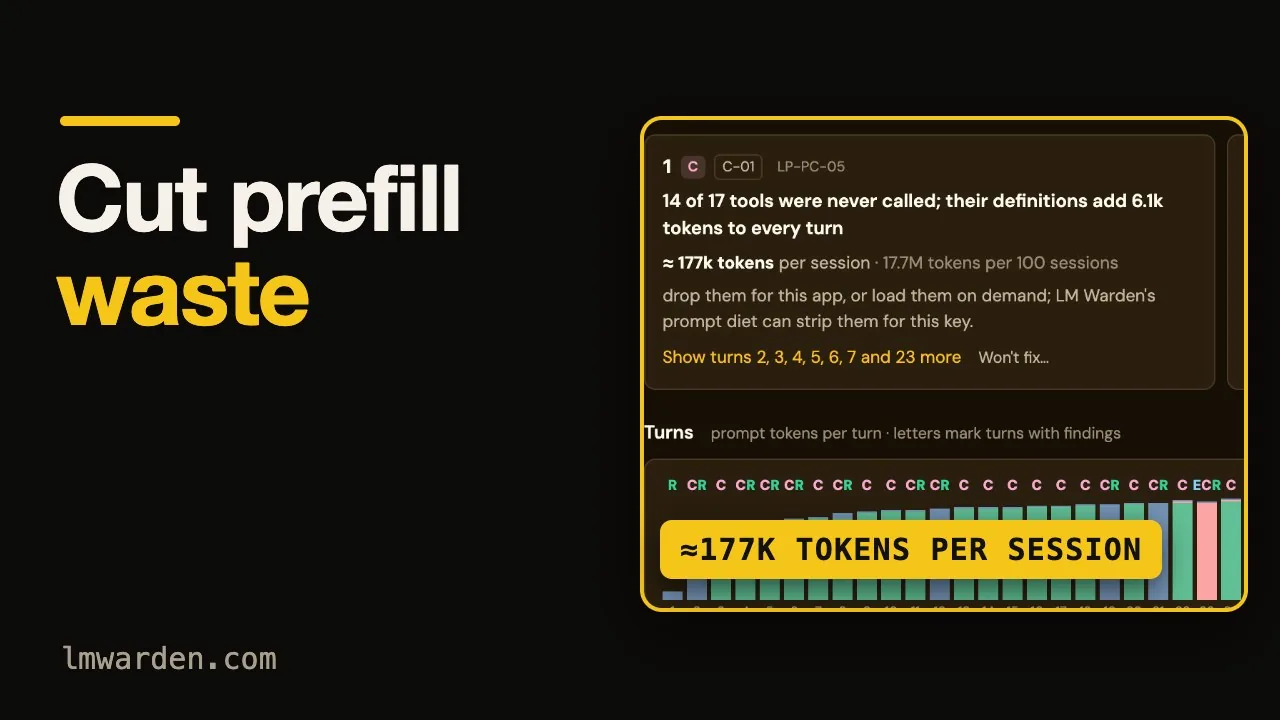
Prompt Lens: see what your LLM app actually sends
Video, 1:29, with English captionsPrompt Lens shows what your LLM app actually sends on every request, what the engine reused from cache and what it had to compute again, and the fixes worth the most. For developers building apps and agents that spend tokens; part of LM Warden, free and open source.
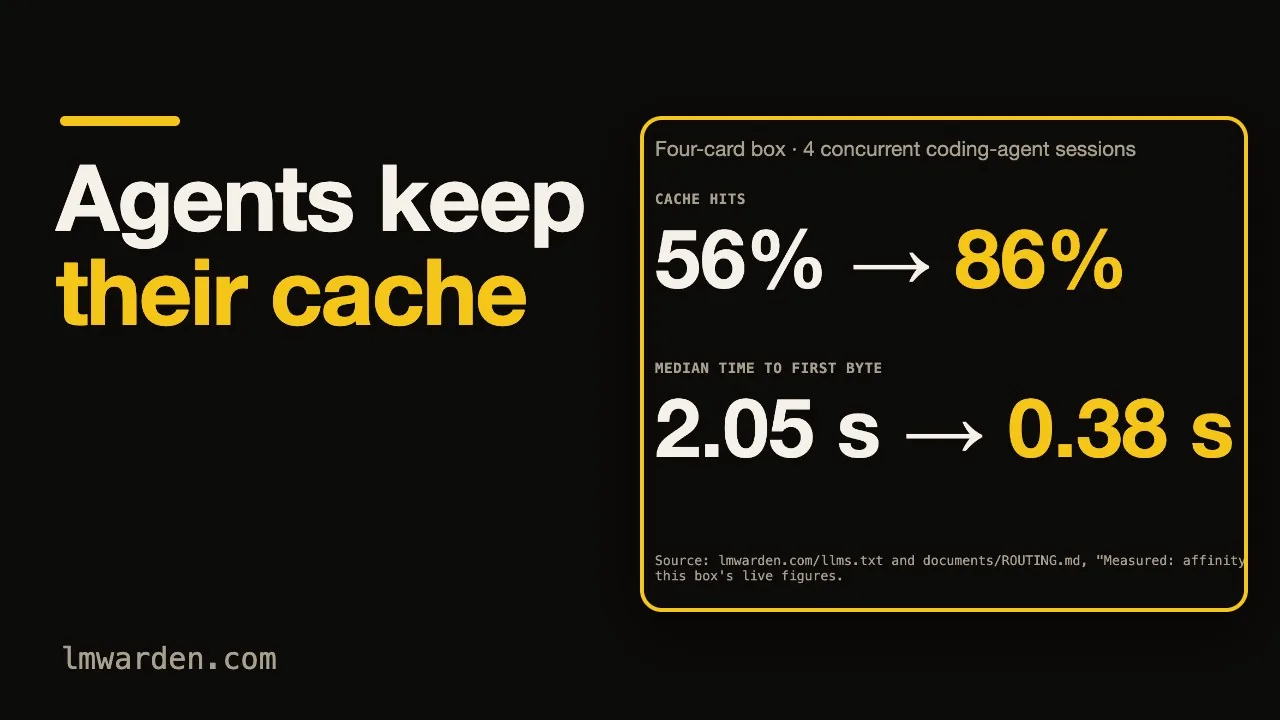
Coding agents keep their KV cache: replica affinity
Video, 1:00, with English captionsWith several replicas of a model, LM Warden sends each new coding-agent conversation to the least-loaded replica and keeps it there, so its KV cache is reused instead of rebuilt. For teams running coding agents on their own GPUs; free and open source.
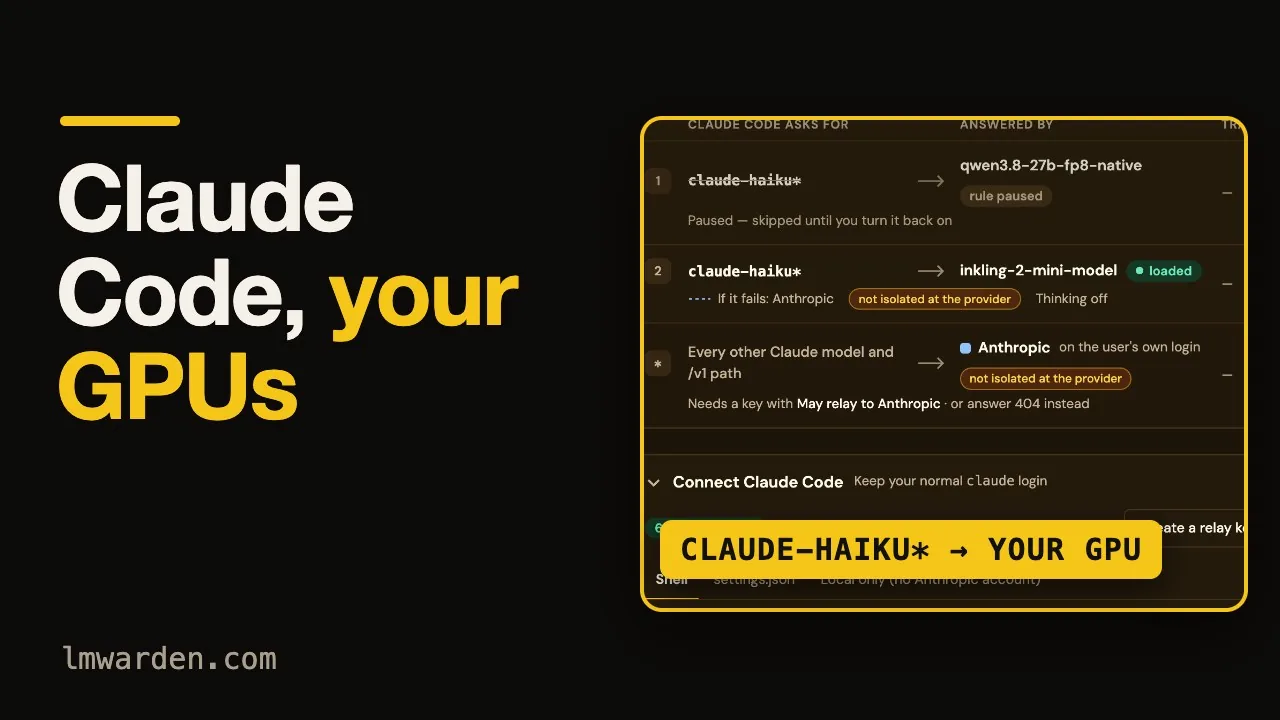
Claude Code on your own GPUs: route Haiku calls locally
Video, 1:20, with English captionsLM Warden speaks the Anthropic API, so Claude Code can point at it and keep your normal login: one rule sends routine calls such as claude-haiku* to a model on your own GPUs, and everything else still goes to Anthropic. Free and open source.
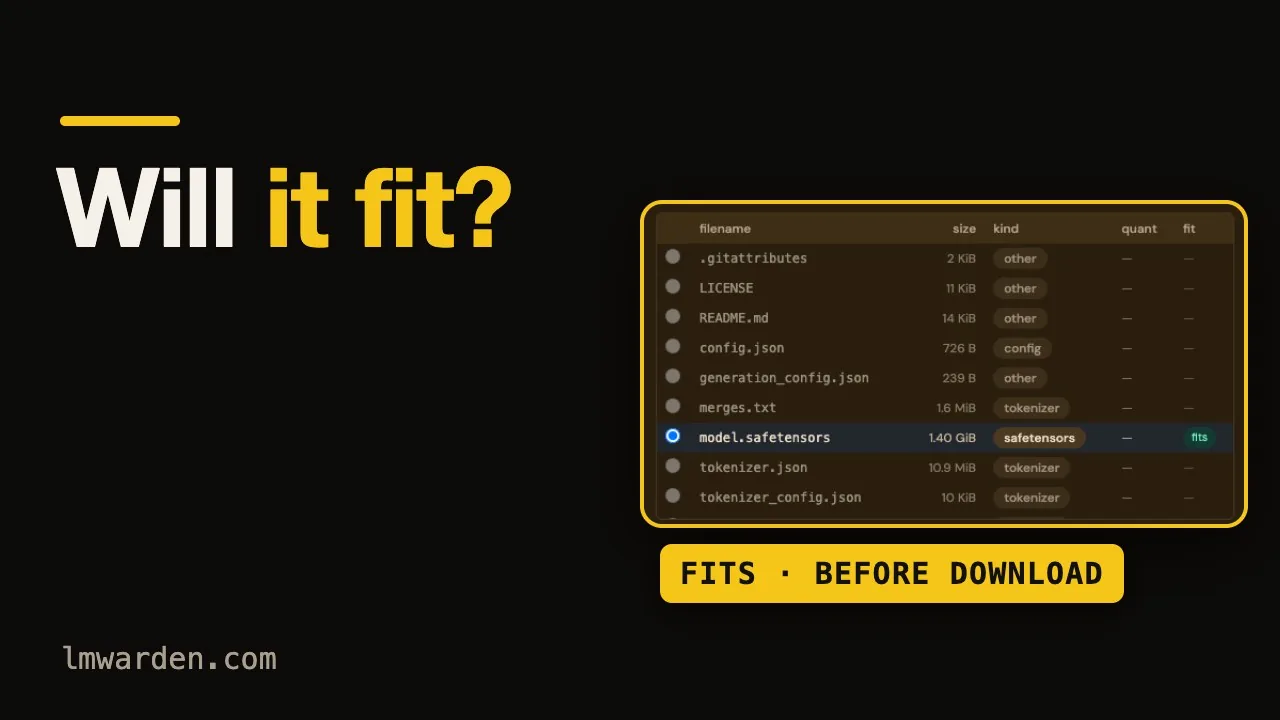
Run Hugging Face models: fit check before download
Video, 0:59, with English captionsPaste a Hugging Face repo into LM Warden and every file gets a fit verdict against the GPUs you pick before a single byte downloads; then the weights download and the model loads while you watch the engine’s own log. Free, open source, no command line.
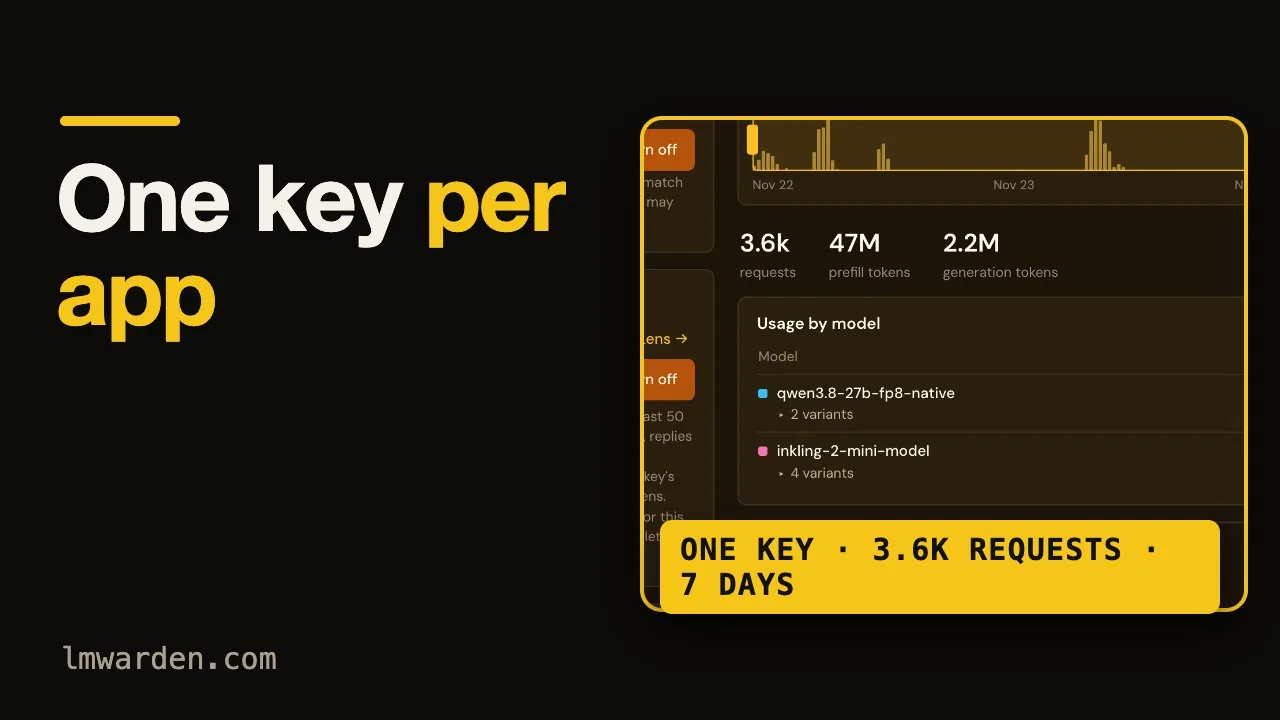
API keys for self-hosted LLMs: one key per app
Video, 1:08, with English captionsLM Warden gives every app or person its own API key with a priority, a usage page and an off switch, so you know whose requests are using your GPUs. One OpenAI- and Anthropic-compatible endpoint for every client; free and open source.
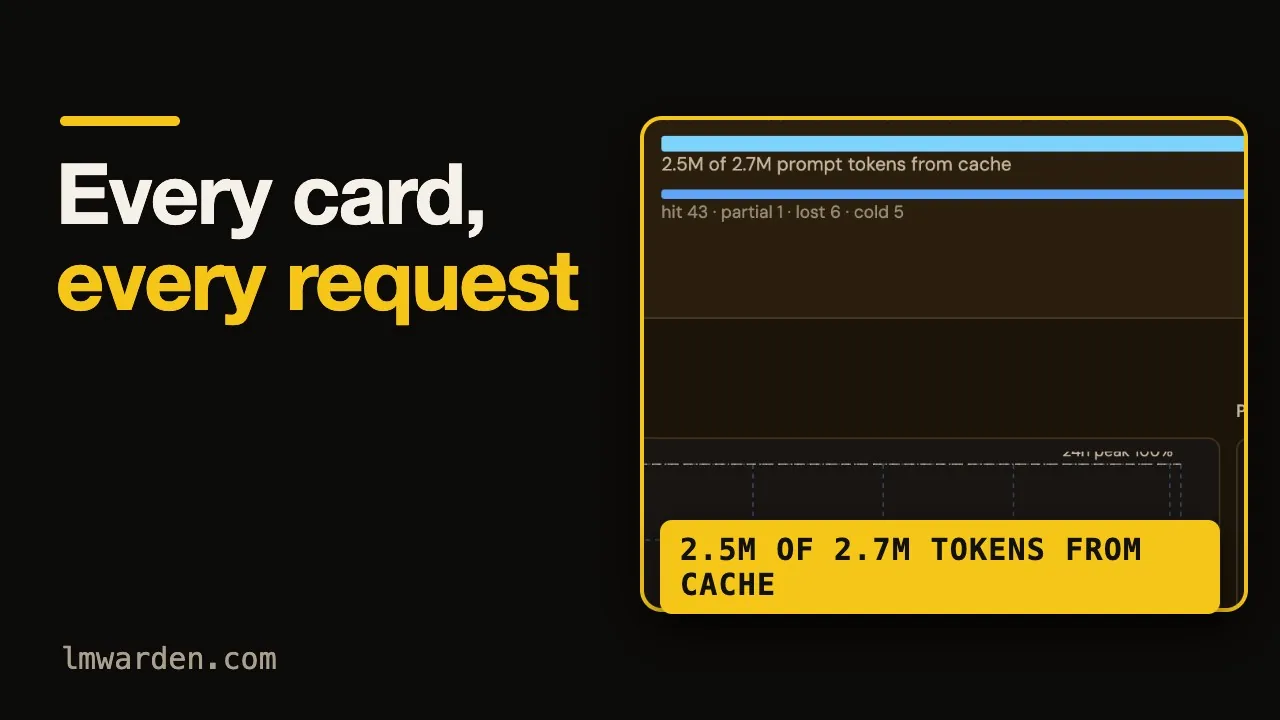
GPU stats for self-hosted LLMs: every card, every request
Video, 1:03, with English captionsLM Warden’s Stats page shows your requests on your GPUs: time to first token, decode and prefill speed with p50 and p95, what came from cache, power draw, and each card’s load, temperature, VRAM, power and fan. Free and open source.
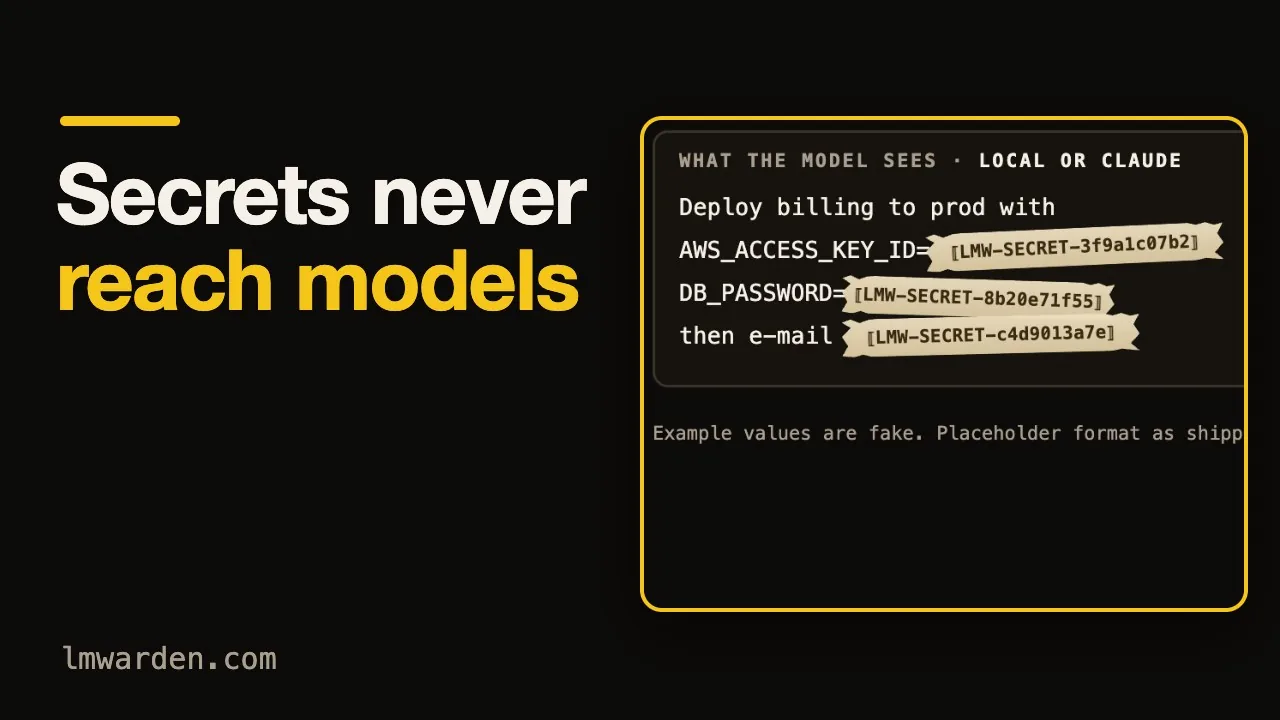
Keep secrets out of LLM prompts: sensitive data guard
Video, 1:50, with English captionsLM Warden’s sensitive data guard replaces keys, passwords, card numbers, e-mails and phone numbers with placeholders before any model sees a prompt, local or Claude, and puts the real values back in the answer. For on-premise and air-gapped setups that handle sensitive data.
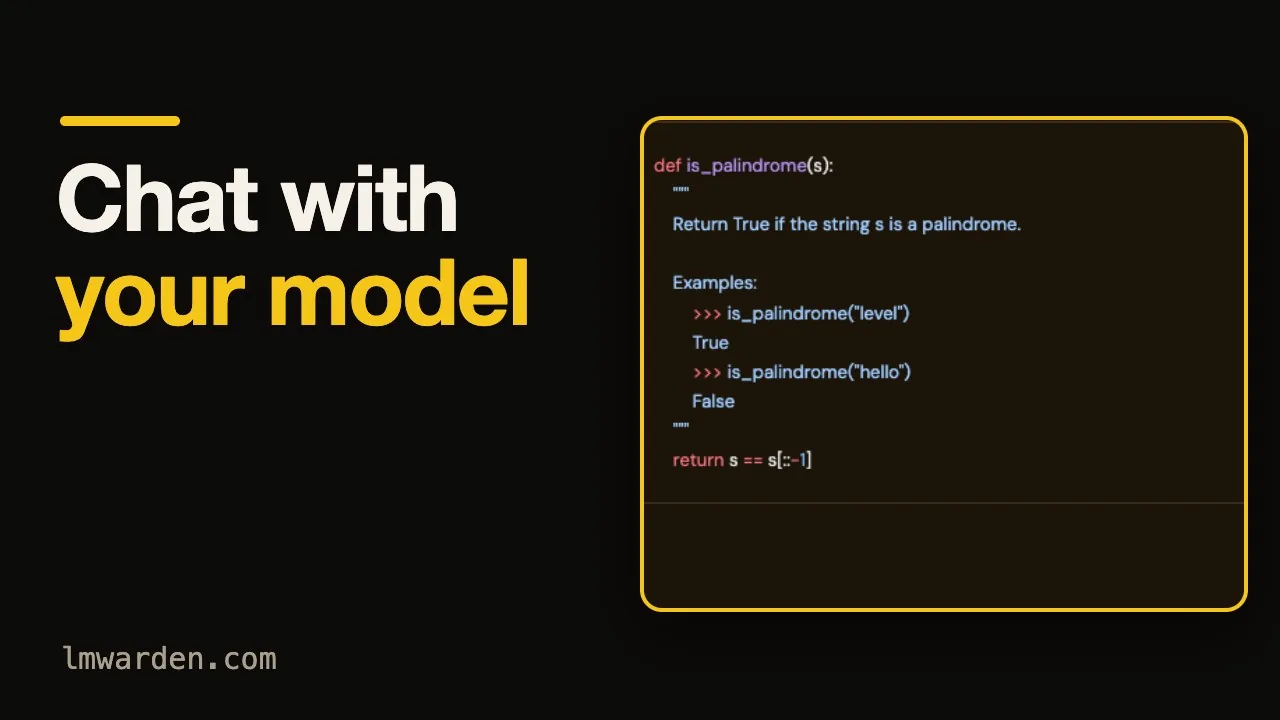
Chat with your own model, plus chat-ui (open source)
Video, 0:51, with English captionsLM Warden’s console has a chat for your own models: ask it first, then call the same model from your code, OpenAI or Anthropic style. The chat is chat-ui, a free, open-source component you can add to your own app with one npm install.
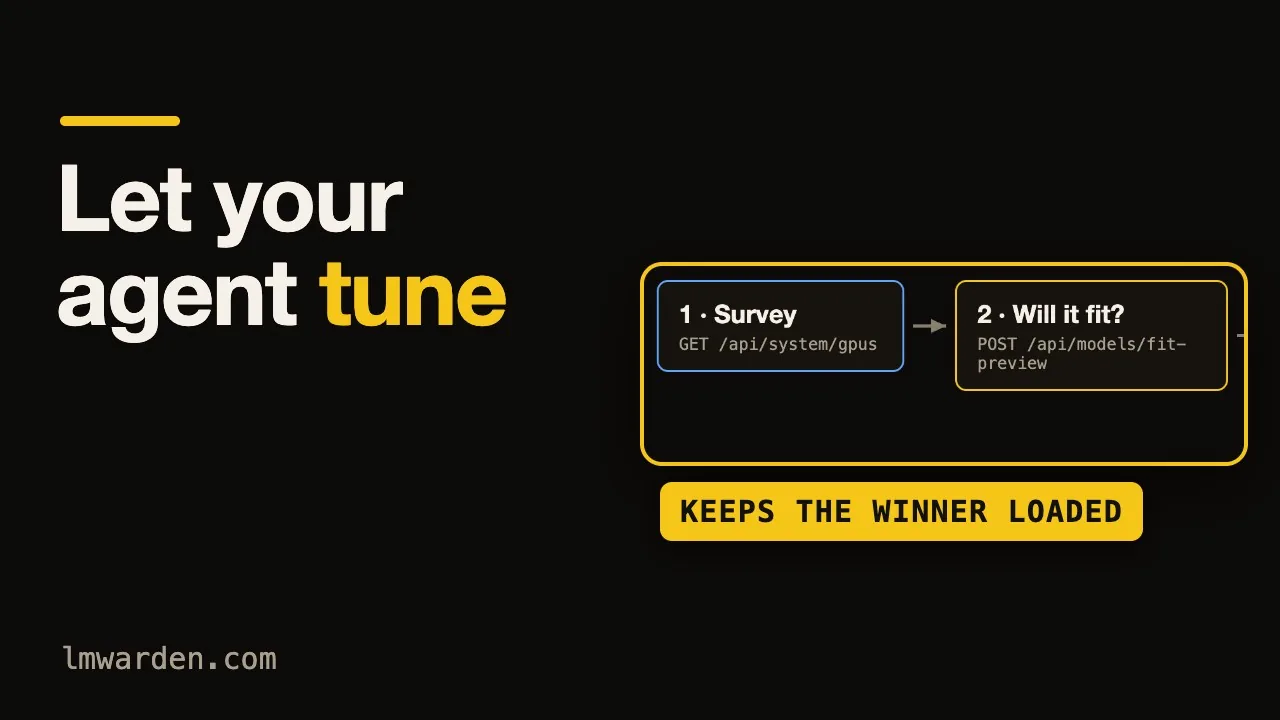
Let your coding agent tune your GPUs
Video, 1:08, with English captionsEverything LM Warden’s console does is an API call, so your coding agent can find the fastest model layout for your GPUs: it shortlists models, compares tensor parallel with replicas, and keeps the best. Free and open source.
The narration voice is AI-generated. Numbers on screen are from lmwarden.com or from LM Warden’s own measurements, as each video says.